HVAC Competitive Analysis and Why It’s Important
Firman Faryd, March 17, 2026
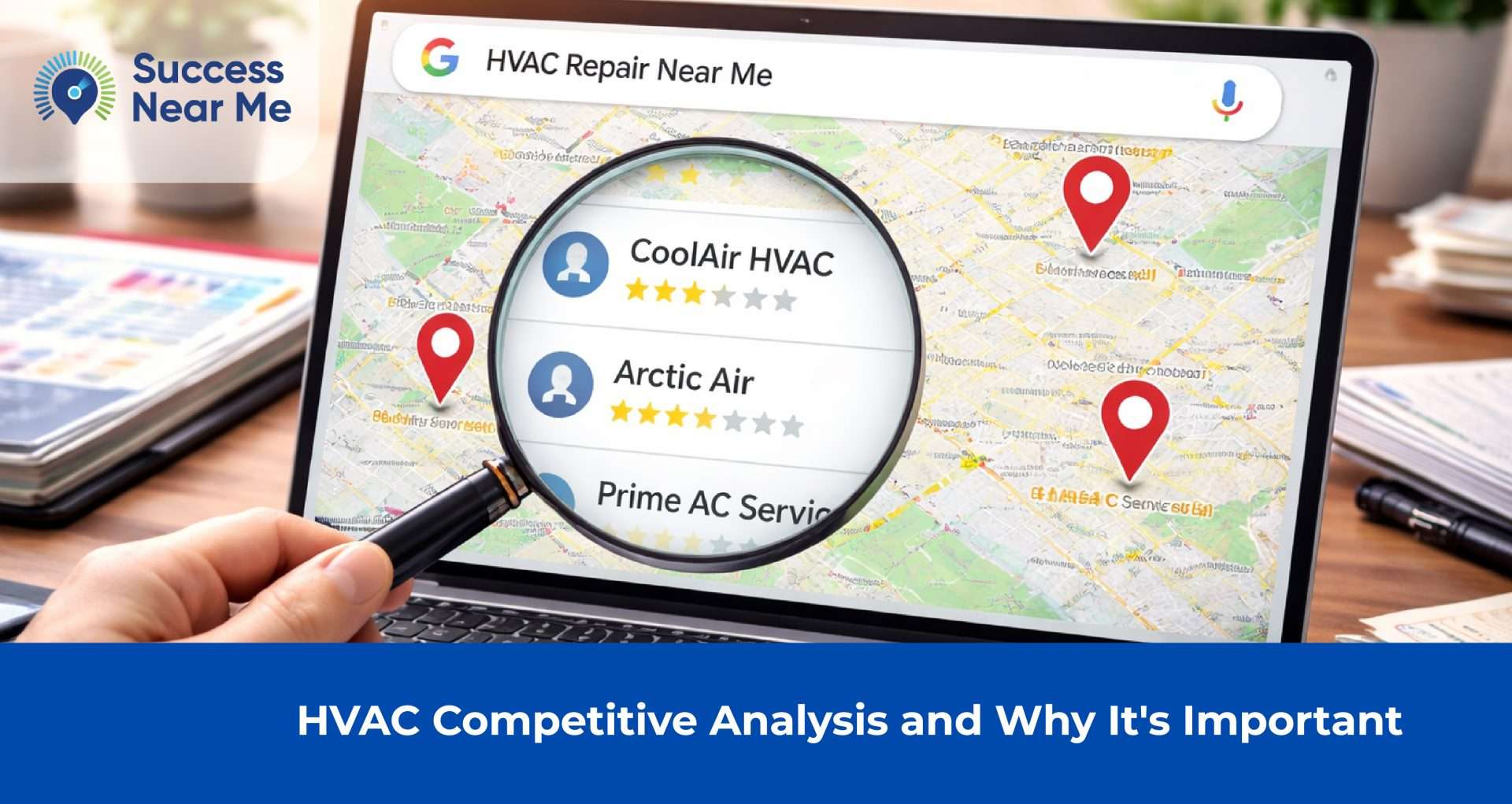
In the competitive world of local home services, the fundamental truth of 2026 remains unchanged: when a homeowner faces a heating or cooling crisis, they are looking for a company they can discover quickly, trust immediately, and reach without delay.
Before you start pouring your budget into search engine optimization or paid advertising, it is crucial to understand the landscape. You need to carefully study the local heating and cooling companies that are currently dominating your specific market area.
Here is your comprehensive guide to auditing your competitors and finding the strategic gaps you need to win.
1. Identify Your True Local Rivals
Your first step is to pinpoint exactly who you are up against.
- Begin your research by identifying the top three to five HVAC contractors operating within your primary service territory.
- Perform a Google search using your most important industry keywords.
- You should also search your top 10 keywords combined with “near me” variations.
- Carefully observe the local map pack results.
- Take note of the businesses that consistently show up at the top of these searches.
- Capture screenshots of the top map pack listings and the paid advertisement results for your records.
2. Audit Their Digital Footprint
Once you know who your top competitors are, you need to dissect their entire digital presence. You should audit their strategies across search ads, website optimization, online reviews, social media, and Google Business Profiles.
Pay close attention to these critical signals:
- Google Business Profile (GBP) Health: Check if they maintain a complete profile featuring accurate categories, up-to-date operating hours, fresh photographs, and a direct link to their website.
- Website Structure: Look for dedicated pages on their website that highlight specific services for individual cities. Review their homepages, specific service pages, and localized city pages.
- Core Offers: Identify their most compelling promotional offers, such as claims of emergency services, financing options, or ongoing maintenance memberships. Note whether they are pushing free estimates, tune-ups, or repair specials.
- Review Management: Analyze their total number of reviews, how recent those reviews are, and their strategy for responding to negative customer feedback. Document each competitor’s overall star rating, total review count, and the exact date of their most recent review.
- Social and Video Presence: See if they maintain an active presence on platforms like Instagram, Facebook, YouTube, or utilize short-form video content. Note if they are leveraging video formats or showcasing customer testimonials.
- Advertising Strategy: Look for evidence of search network ads, Local Services Ads, or retargeting campaigns that track your browser after you visit their website. Check if they feature clear booking options directly from these channels.
3. Find the Gaps (What to Learn)
The objective of a competitive analysis is absolutely not to copy your rivals word for word. Instead, your mission is to identify their blind spots and capitalize on those strategic gaps.
Here are a few smart examples of market gaps you might find and exploit:
- The Speed Gap: While every competitor might advertise “emergency service,” you might notice that no one actually defines their specific response times. You can win by guaranteeing and clearly communicating a specific arrival window.
- The Trust Gap: Many businesses rely on the generic phrase “family owned,” but fail to actually prove their reliability. You can step in and build immediate trust by prominently displaying photographs of your technicians, official certifications, and rock-solid service guarantees.
- The Social Proof Gap: Your competitors likely have Google reviews sitting on their profiles, but they might not be actively utilizing them. You can gain an edge by creatively repurposing your positive feedback into compelling advertisements, dedicated landing pages, and engaging video testimonials.
- The Conversion Gap: You may find that while everyone is spending money on Google Ads, very few are directing that traffic to highly relevant, city-specific landing pages.
The Ultimate Goal
When analyzing your local market, remember that your ultimate goal is not to look identical to the other companies in town. Your true objective is to position your HVAC business as the clearest option, the fastest responder, and the easiest company for a stressed homeowner to trust.
Spot your competitors blind spots and claim their market share. Get the ultimate local audit framework inside the free access HVAC Marketing Guidebook.